
Paying your bills in Basel

Moving to Basel eBookIn addition to paying at Basel shops with credit cards, direct debit or cash, you’ll need to pay bills that come to you, either by mail or electronically, for rent, water, power, TV, phone, etc. Depending on what you’re used to in your home country, you might find paying your bills in Basel a bit different than what you’re used to. Personal checks are not used in Switzerland in general, but there are several other options to pay things.

Payment slips (orange and red)

In Basel and the rest of Switzerland, slips of orange or red paper are come with most bills, often under the breakdown of the bill as a tear away sheet). On these slips there will be pre-printed information or blank spaces for or the payee (the company or person you owe money to), payor (you), the amount due and detailed bank account information. The German term for these slips is ‘Einzahlungschein’.

Most of the bills you receive from the larger companies (phone, tv, power, etc) will be of the orange type. Orange payment slips have a unique 27 digit reference number (called the ISR or ESR number) for that payment allowing companies to keep track of your payments easily. Red paying in slips do not generally have the reference number. These red slips are often provided by smaller businesses, individuals or for one off services. The ‘orange’ payment slip is a very light orange, and the ‘red’ paying in slips are closer to a light pink. If you bank online, be sure to look carefully to determine what color your bill is.

More and more companies are providing online bills, without payment slips, which just provide you with the information of the specific payment without a slip. If you’re just provided with bank account info (an account or IBAN number), you’ll probably select the tab to pay a red slip when paying online. If they give a unique 27 digit ISR reference number with the payment, then you’ll likely have the equivalent of the orange payments slip. My mobile phone company now does this, since I requested they go paperless. If you have any question on which type of payment to make, just call the person or company you plan to pay and they will be able to tell you.

The red payment slip:

  • This is a method to transfer money into the bank account of a person or company
  • The payment slip shows the IBAN of the person/company you’re paying as well as what bank they use
  • The amount due and the payer’s details may be pre-printed by the payee or you might have to fill in the amount and your name and address
  • You should put a short of the reason for payment in the specified field, so both you and the person you are paying know what this is for!
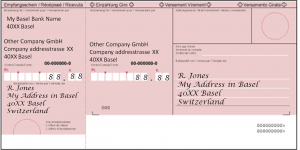
red einzahlungsschein
The red paying in slip generally comes from smaller companies or individuals.

The orange payment slip:

As above, but with an account number (generally 9 digits, in the following format 12-345678-9), and the 27 digit reference number. There is no message field for the recipient (the reference number makes this unnecessary).

Orange payment slips generally come from companies for rent, water, phone bills, cable, etc.


There are numerous ways to pay these bills:

  • Pay from your online bank account
  • Step up a standing order for direct debit from your account
  • Pay at your bank (live with the teller)
  • Pay at the post office
  • Pay at a bank machine

1. Paying bills in Basel from your online bank account

Regardless of which bank you signed up with, or if you have a post office account, you should have an option to pay your bill from your computer. I won’t go into specifics on how to do this, as each bank’s online banking platform is unique. Generally, you need to look for a tab or button, marked ‘payments’ or ‘pay bills’, and then you’ll be able to choose between orange payments slips, red payment slips and often also be able to select foreign and domestic bank transfers.

Many online interfaces for banks allow you to save a company you made payments too, so that you don’t have to enter the information from scratch every time. If you use this function, be sure to check the reference number or other specific information is correct every time!If you have difficulties figuring out your interface, most banks have a helpline, or online chat, where you can seek assistance. When you pay your bills online, payment is usually executed the following day, so if you need to cancel or correct the payment for any reason, you might be able to do this for several hours after you complete the payment online (look under pending payments). You should always check a couple of days after paying to make sure that the payment went through. It’s also a good idea to write the date you paid on the payment slip, and keep this for several years (at least!). Most banks also have a mobile phone app which you can use to pay your bills if you prefer.

2. Setting up a standing order/direct debit for regular bill payments from your bank account

You can authorize your bank to make payments to specific companies for regular costs. I do this for rent, health insurance and other regular, fixed cost bills. Bills that are not the same month to month, can also be authorized (phone, etc) as a standing order/direct debit but I would think twice before paying this type of bill as a standing order, in case you have need to dispute your bill. It’s easier to do this if you have not yet paid them!

3. Payment at any branch of your bank.

If you prefer to pay in person, and have a paper record of the transaction, you can go to your local bank branch (generally you have to have an account there). You can give the teller your account information and your payment slips, and they can pay these out of your account. You’ll either receive the stub of the payment slip stamped by the bank as proof of payment, or, if you pay multiple bills at once, they’ll pool them and generally give you one stamped slip reflection the total of all the payments. You should keep these stamped stubs as these are your only record of payment. If you have a cash heavy business, you could also pay these bills at a branch of your bank in cash, but you still have to have an account there.

4. Paying at the post office:

In Switzerland, the post office is also very much like a bank. If you have a PostAccount you’ll be able to pay online, or if you go to a branch to pay out of your PostAccount. If you prefer to pay your bills in cash, you can take cash and your payment slips to any post office. You do not need an account with them. Just walk in, take a number or wait in line, and give the teller you slips and the cash (you don’t need exact change). In return, they will do the payment and give you back stamped payment stubs from your slips, that you should keep as proof of payment.

5. Paying bills at the bank machine

Some banks have bank machines where you can make your payments. Make sure your bank has this function before you open an account if you want use this function. You’ll only be able to do this at machines where you have an account (and if that machine has the ability to accept this type of transaction). After you’ve inserted your bank card and given your PIN, you can select pay bills, and feed in your payment slips. Then you just need to authorize payment at the machine.

If You Don’t Pay Your Bills on Time

Most bills have a pay before date; and if they don’t you can contact whoever is billing you for a due date. For most bills the payment period is 30 days. If you don’t pay by the specific date, you generally get a warning, followed by a service charge, which can range from 20-100CHF (I could also imagine this being higher, depending on the company and the size of the bill). You’ll also likely incur some sort of interest on the payment in addition to this.

Moving to Basel eBookIf you still don’t pay, the billing party will report you to the ‘collection authorities’ that will summon you to their office, or hire a bill collection agency that will try to find you to get the payment. This will incur all sorts of additional charges on top of the original bill, and can lead to issues on a larger scale (court cases, evictions, getting a flat in the future).

If you have a problem with a bill you received, mail a written letter to the supplier, by registered mail. Then, follow-up with a call to try and resolve the issue. If this fails, you can seek arbitration from a third party (if both parties agree). Failing this, you should seek legal help to resolve the issue in the court system. Do yourself a favor. Do your best not to let it get this far!

Bill Paying Scams

There are some scams running in Switzerland where companies send you a payment slip and a bill for services that you did not receive. Just because you receive a bill from someone it doesn’t mean you have to pay it. Those running the scam hope you’ll not look at what the charge is for and pay it regardless. Don’t fall into this trap. If you get a bill that you don’t think you owe money for, be sure to contact the biller to resolve it. If you are certain it’s a scam, scan the bill and file a report with the Basel police.
 

What if I Get Sick While Living in Basel?

Moving to Basel eBookIf you’ve just moved to Basel, it’s possible that at some point you’ll become sick or need medical assistance. I remember after I had been in the city for a month or so; I got food poisoning, and was out incapacitated for a week! Later that same year, I had to have a root canal. I’m pretty sure the cost was more painful than the procedure! Over the last years I’ve lived through colds, flus, eye infections, hangovers, broken bones, and other assorted boo-boo’s. I think it was Indiana Jones who said “it’s not the years, honey, it’s the mileage”…

This post should help you find medical and dental services in the case you get sick or hurt, while in Basel, Switzerland. I’m not a doctor or emergency service expert, so you should think about what you would do in case of illness or accident, and have a plan of your own in place, in case something does happen! The first thing you need to make sure you have is the compulsory health insurance in Basel, and that your employer (or someone) is covering you for accident insurance.


Emergency!!

Emergency Services in Basel
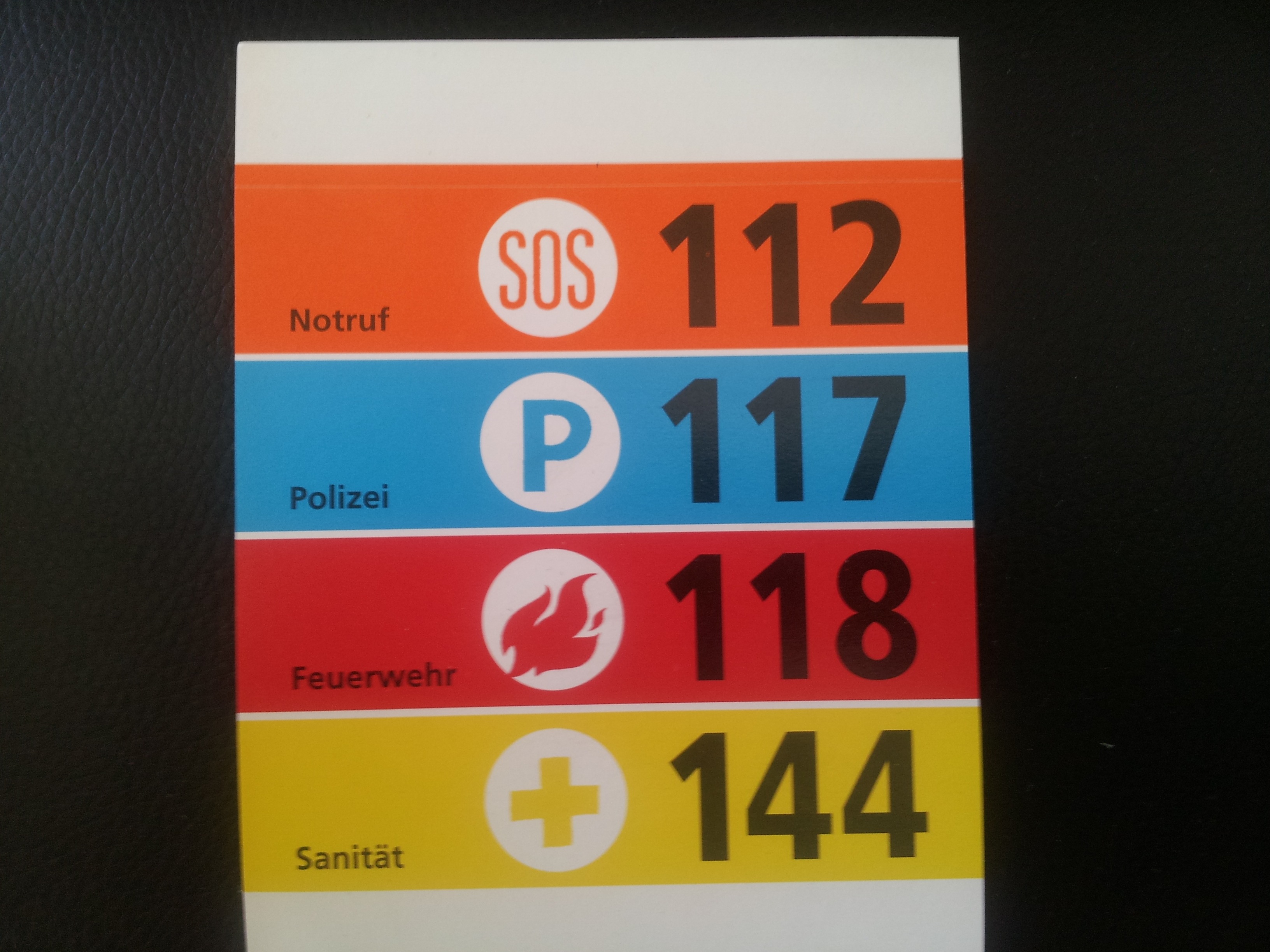
The general emergency number is 112. You can also contact emergency police, fire and ambulance services at their own emergency numbers.

The general emergency number in Switzerland (and many other European countries) is 112. You should memorize this. This would be the equivalent of 911 in North America, getting you to general emergency services (fire dept, police dept, emergency medical service), and should be taken as seriously.  You should be able to dial this from any working phone. Even mobile phones with a non-functional SIM-card have an SOS mode that should allow you to dial this.

In case of a health emergency that requires an ambulance specifically, you can dial 144, in Switzerland. Ambulances in Switzerland are probably not covered by your health insurance plan, at least not entirely. I’ve never had to use the ambulances here, but from people I know who have,  this is between 300-1800 CHF for a single ambulance trip, depending on how far away you had to be taken and what services are necessary! Check this with your Basel health insurance company, if you have questions about how much you are covered for, if you need to get an ambulance to the hospital.

Some other numbers that might be handy in other emergencies are: Police (Dial: 117) or Fire (Dial: 118) or Poison control (Dial: 145).

You can also go on your own to the emergency room of hospitals or clinics:

  1. University Hospital Basel (Universitätsspital Basel)
  2. University Children’s Hospital (Children’s emergencies)

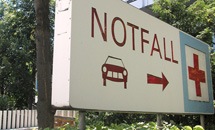
Follow the signs that say ‘Notfall’ (emergency)!!

This is the emergency room sign (notunfall) in Basel.
If you have an injury or illness that requires immediate attention, go to the emergency (Notfall) room of the hospital.


You’ll have to show proof of health insurance so be sure to have it with you. In fact, you should have your proof of insurance with you at all times, just in case anything ever happens to you and you require emergency medical treatment.


Is there a doctor in the house?

If your situation is not life threatening (or painful) enough to warrant an ambulance, or a trip to the emergency room you might still need a doctor.

The doctors that you are eligible to see, and how to approach them, depends on your health insurance plan. Be sure to check with your insurer to see how to proceed. If you don’t seek medical attention as described by your policy, you might not be eligible for coverage. For some policies, you need to see a GP before a specialist, others require a telephone call to a medical adviser before seeking out a physician. Once you figure out what medical plan you have, and how you need to proceed, choosing a physician can be another hurdle. You can talk to friend or work colleagues to let you know who they like or who they don’t. Alternatively, you can go online to look for physician reviews on sites like http://www.endconsumer.org or look on the English Forum in Basel.

If you work for one of the big companies in Basel and you need to see a doctor, ask if there is a on-site medical center.  You’ll generally be able to see the doctors and nurses there, free of charge.

Perhaps you want to go see a physician outside of work hours, or it’s Christmas morning or New Years Day and you’ve fallen ill. If you are not willing to brave the emergency room, there are some medical practices that are open outside of the standard working days. Medix Toujours is open 365 days/ year from 7am – 10pm. It’s a walk-in clinic for illnesses and injuries, where no appointment is necessary. Again, you should check with your insurance to see if they will cover you, but it’s nice to know that places like that exist!


Colds, scrapes and bruises, hangovers, etc.

The contact information for the Notfall Apoteke (emergency pharmacy) in Basel, Switzerland
If you need something from the pharmacy outside of normal opening hours, try the Notfall Apotheke on Petersgraben.

If you don’t think whatever is wrong with you requires professional medical attention, you might be able to find something to treat you at the local pharmacy. These are all over the place, and are generally indicated by a green cross on the shop, and the words Apotheke. They are located across the city and are open during the standard shopping hours. If you can’t make it during standard opening hours, there is an emergency pharmacy at opposite the University Hospital which is open outside of normal working hours and on weekends and holidays, and another one by the SBB which is open from 7-22 365 days a year. Over the counter drugs are more expensive in Switzerland, than in most other places in the world, so you might want to stock up on headache pills and cough medicine while you’re in another country!


Dental care

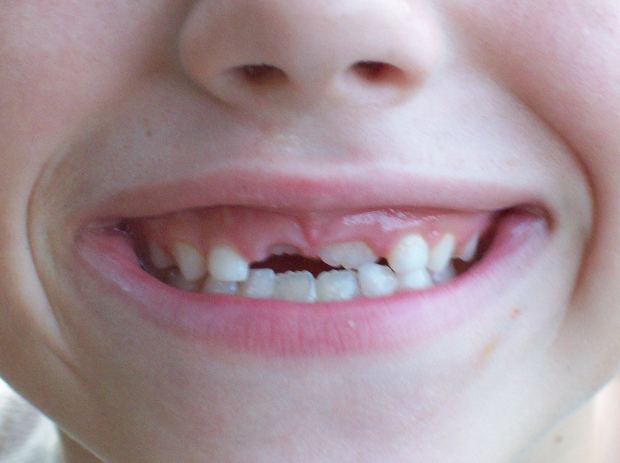
Taking care of your teeth in Basel.
Dentistry in Basel can be costly!! It might be better to schedule regular check-ups when you’re at home!

Like many things in Switzerland, dental care in Basel is great quality, but really expensive. If you’re an Expat, and you need the standard check-up/cleaning, etc. you might think of taking care of this in your home country when you go and visit. You can get supplementary insurance that covers dental, but it’s also costly. There are dental practices just across the border in Germany or France, when you can likely find dental work for less. If you decide to go to the dentist in Basel, or you need emergency dental work, I don’t have a recommendation for you, but talk to some of your friends or work colleagues, for recommendations or look on this recent thread on the English Forum. I’m not 100% certain if dental is covered in the case you damage your teeth by accident, so be sure to talk to your accident insurance provider regarding this (accident insurance is probably provided by your employer).

There is an excellent general health guide provided by the government which you should definitely download and have a look at.

I hope this post helps you find medical or dental assistance in Basel, Switzerland! Get well soon!!!


Getting Out of Basel for a Weekend

Moving to Basel eBook


While Basel is a beautiful place to live and work, you’ll probably want to go somewhere else on occasion! It’s likely that you’ll do this in one of three ways, by car, by train or by plane.

By Car

Basel Cars
Basel is a wonderful base to see the rest of Switzerland, as well as the rest of central Europe!

If you don’t have a car in Basel, but have a valid driver’s license, you might want to rent a car to get out of the city for a few day. The process for this is the same as it is most places in the world. You’ll need to bring reserve online, or by telephone, be sure to bring your license when you pick up the vehicle.

Also, if you work for one of the larger companies in the city, bring your work ID, as it might get you a discount at some of the rental agencies. You can ask at work if such a discount exists, to help you chose a car rental agency. Once you are done with the vehicle, be sure to bring it back in the same shape as you took it out, and refill the fuel tank before you return it.

There are several international car rental agencies available in the city:

Budget

Hertz

Europcar

If you have a car its easy to plan a roadtrip. Again, its wise to consider membership to the autoclub TCS if you have a car of your own and are travelling within Switzerland. You might also consider investing in a GPS unit!


By Rail

Trains from Basel
The trains in Switzerland are generally fast and efficient. Get a 1/2 tax card to make them affordable too!

The Swiss also have an extensive and extremely reliable train system that reaches most Swiss cities, towns and villages as well as providing access to many other major European city centers. High-speed trains go direct from Basel to Frankfurt, Paris and Milan in under 4 hours. Basel has two major train stations, the Basel SBB (Swiss Rail) and the Basel Badischer Bahnhof, which is operated by the German Rail (Deutsch Bahnhof-DB). Train connections from other countries are often less reliable than Swiss trains, a factor that should be taken into account when travelling. Furthermore, inclement weather, fallen trees or occasional accidents on the train lines can disrupt service. This is much more common in the winter months.


By Air

Air travel from Basel
Basel has its own airport, with both standard and low cost carriers!

Basel’s airport is close to the city center and remarkably easy to reach by either public transportation or driving. Due to the size of the airport, going through security is generally quite fast, and the airport restaurant/ business lounge facilities are excellent. Low-cost carriers fly out of Basel airport, providing economical connections to much of Europe, but be sure to book early to get the best prices! Flights out of Basel are somewhat limited, as the airport is small, but Zurich Airport, which is much larger, is about 1.5 hours away by train.

There are numerous airlines you can travel, some are listed below:

Air Berlin

Air France

Lufthansa

Easyjet

Swiss

There are also online booking services, like ebooker.com that can help you find the best prices. You can use these sites to book flights, car rental and hotel (or any combination of these) in English.


Exploring Switzerland

Swiss vacation
You’ve seen Basel, now check out the rest of Switzerland!

If you don’t already have a destination or activity in mind for your trip, you have your work cut out for you deciding. Why not check out the rest of Switzerland? There is a company, MyDays, that has great ideas for trips in Switzerland, and other locations in Europe.